Deal Pipeline With Coaching for Every Stage
A pipeline board with your own stages, plus coaching on every deal: what done means at each stage, what is missing for the next one and a dated plan to close.
Pipelines Shaped Like Your Sales Process
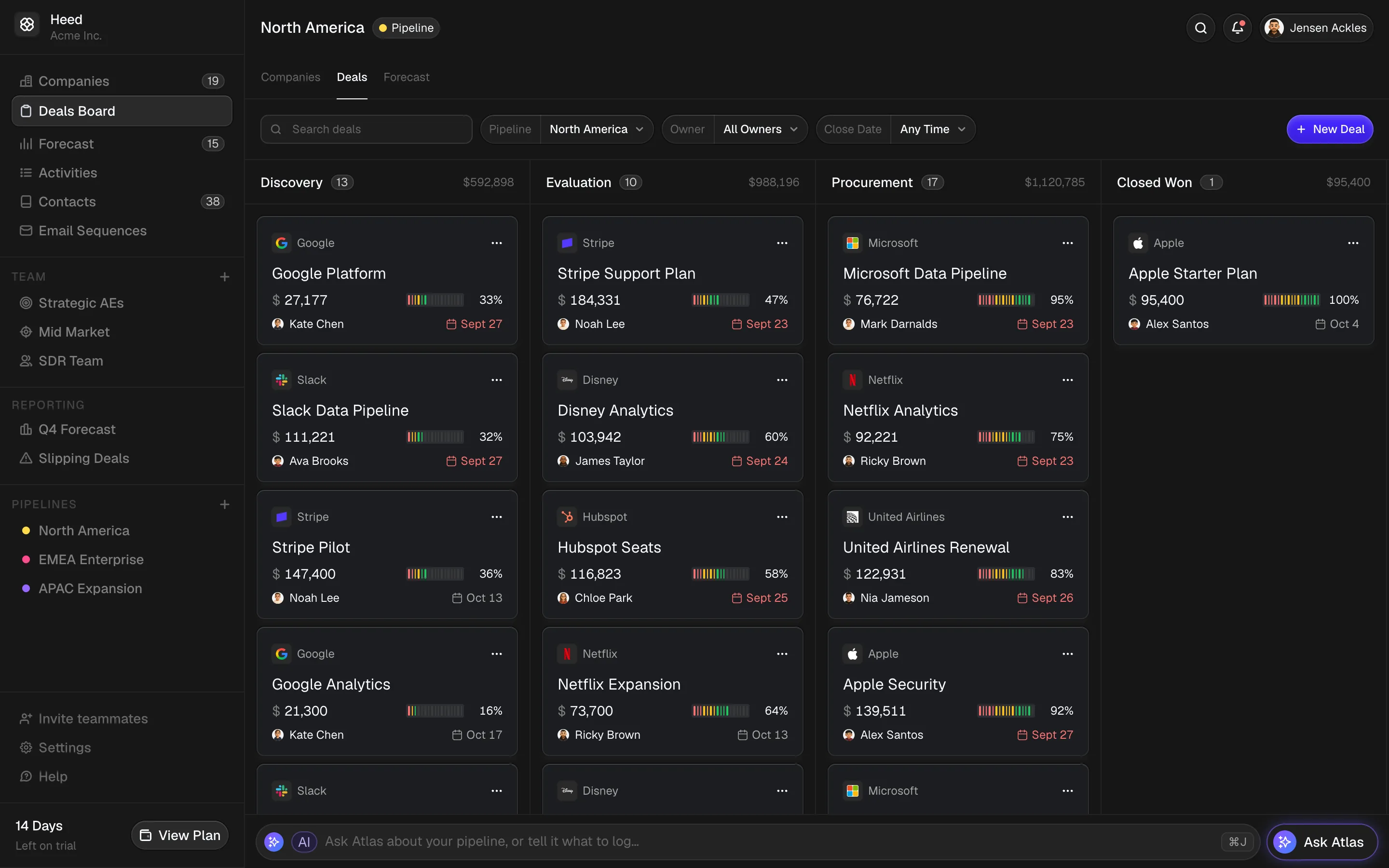
New business, renewals and partner deals rarely move the same way. Give each one its own pipeline with its own stages and default probabilities, then work the board. Values, owners and close dates are on every card, and the totals feed the forecast.
- As many pipelines as you need, each with its own stages
- Default probabilities per stage
- Drag deals across the board as they move
Agree on What Done Means at Each Stage
Each stage has a short “done when” checklist. Heed ships sensible defaults and admins can edit them. On every deal, the coaching panel checks the current and next stage against the emails, meetings and notes, and marks each item done, not yet or unknown, with the evidence.
- Demo given to the people who decideDemo on Oct 2 with Lena Fischer, VP SalesDone
- Technical fit confirmedEmail on Oct 6: the import works with their billing systemDone
- Budget owner identifiedNobody with budget authority has joined a call or threadNot Yet
- Success criteria agreedNothing logged about this yetUnknown
See What Is Missing for the Next Stage
The panel turns the gap into a short list of actions, each with an Add Task button. Signals call out what the numbers show: past close date, no recent activity, one contact only, a probability above the stage, or no demo, pricing talk or legal review yet. Assigned work shows up in tasks.
- Get the CFO on a call to confirm budgetAdd Task
- Write down the success criteria with LenaAdd Task
- Send pricing for 60 seatsAdd Task
A Close Plan With Real Dates
For a deal that matters this quarter, ask for a close plan. Atlas drafts the steps from today to the close date, the rep changes what is wrong and saves it. When the plan says legal review by October 29, everyone can see on October 20 whether the contract has gone out.
- Oct 14Budget call with the CFO and Lena
- Oct 17Send pricing for 60 seats and the order form
- Oct 22Security questionnaire back from their IT team
- Oct 29Legal review of the order form
- Nov 5Signature, kickoff booked for the following week
Questions People Ask
- Can I have more than one pipeline?
- Yes. Each pipeline has its own stages and default probabilities, so new business and renewals can follow different steps.
- Who decides what each stage checklist says?
- Every stage starts with a sensible default checklist. Admins can edit the items to match how your team sells.
- How does the coaching panel decide if an item is done?
- Atlas reads the deal's activity, such as emails, meetings and notes, and marks each item done, not yet or unknown. It shows the evidence, so you can check its reasoning.
- What are deal signals?
- Flags Heed raises from your data: past close date, no recent activity, likely to slip, single-threaded, probability above the stage, and no demo, pricing talk or legal review yet.
- Who writes the close plan?
- Atlas drafts a dated plan from today to the close date. The rep edits it and saves it on the deal.
See Which Deals Need You This Week
Join the waitlist and we’ll email you when your workspace is ready.